
Half the Outlets in a Room Dead but the Breaker's On? The 30-Second Check
September 27, 2026
QUICK ANSWER: When part of a room loses power but the breaker panel shows nothing tripped, the cause is almost always a GFCI outlet that tripped somewhere on the same circuit, cutting power to every outlet wired downstream of it. That GFCI does not have to be in the room where the outlets went dead. It might be in the bathroom, garage, or kitchen, and it can be a plain-looking outlet with no visible red light. The fix is usually a 30-second walk around the house pressing reset buttons, not an electrician visit. If reset does nothing, or the outlet trips again right away, that points to a real fault in the wiring instead of a nuisance trip.
You're vacuuming the living room and the vacuum just dies mid-pass. You check the outlet, plug in a lamp instead, and nothing. You walk to the outlet by the window, and that one works fine. Two outlets dead, two live, same room, same wall in some cases. Your first move is the breaker panel, because that's what everyone does, and every switch is sitting exactly where it should be. Nothing tripped. Nothing looks wrong. The lights in the room still work. It just doesn't add up.
That's the point where most people assume the outlet is broken, or worse, that something in the wall is wrong. It usually isn't.
This is one of the most common electrical calls in Utah County. It's also one of the easiest to solve without anyone coming to the house. Outlets don't share a one-to-one relationship with a breaker the way most people assume. A single 15 or 20 amp circuit typically feeds several outlets, sometimes across more than one room, and a GFCI outlet placed anywhere in that chain can cut power to everything wired after it without ever showing up as a tripped breaker at the panel. Once you know where to look, the check takes less time than it took to notice the outlet was dead.
What's Actually Happening When Half a Room Goes Dark
Outlets on a circuit are wired in a chain, not independently
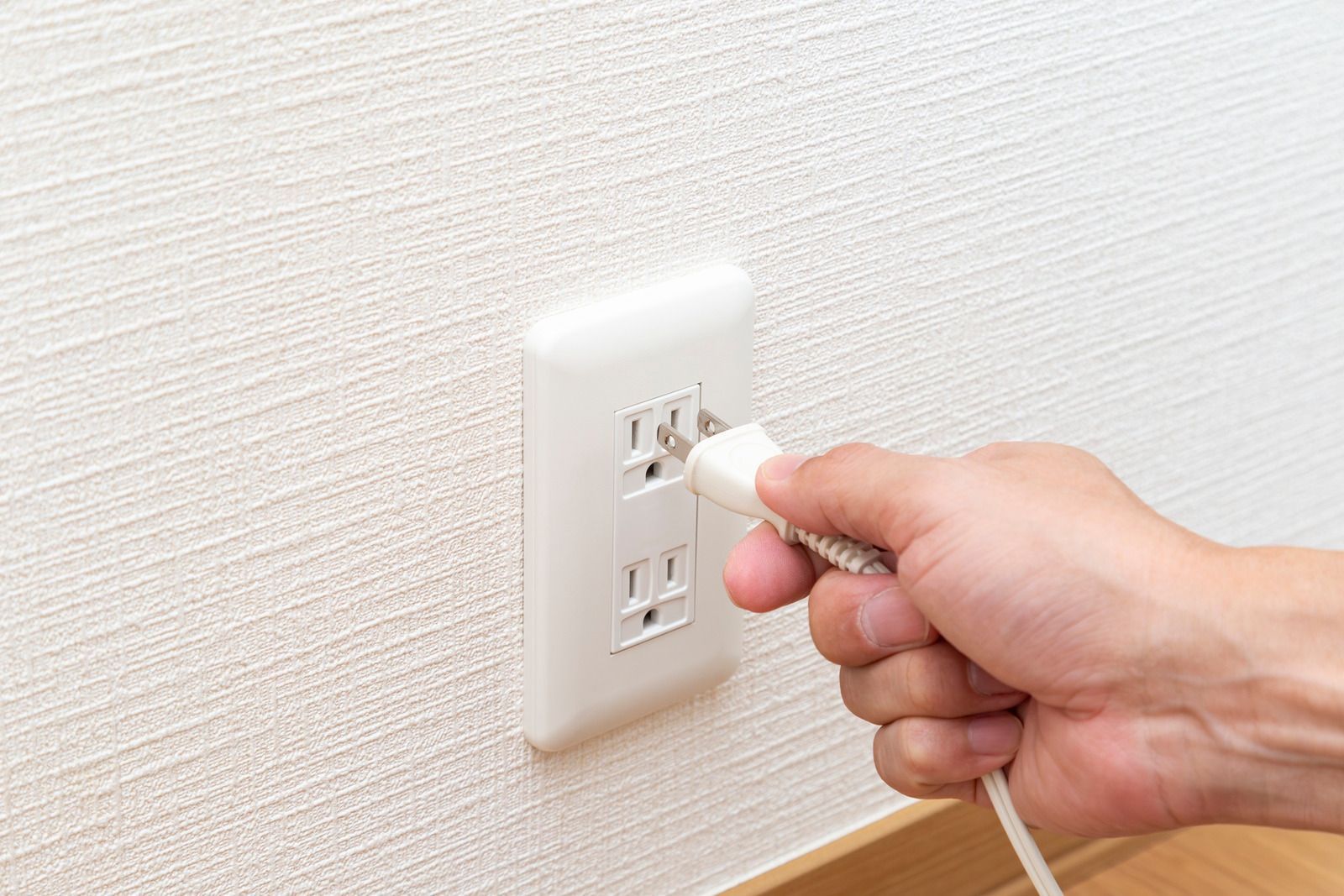
Electricians run one cable from the panel to the first outlet on a circuit, then continue that same circuit to the next outlet, and the next, using short connecting wires between them. A single circuit breaker protects the whole chain, but any single point in that chain can still interrupt everything after it.
A GFCI outlet is a mini circuit protector built into the wall
Ground-fault circuit interrupters watch the tiny difference between outgoing and returning current. If they sense current leaking somewhere it shouldn't, such as through water or a person, they cut power in a fraction of a second. That's a life-saving feature, but it only protects the outlet it's installed in and whatever is wired on its load side, meaning everything connected downstream of it on the same circuit. Wire an outlet to the GFCI's load terminals, and it inherits the same protection and the same on/off behavior as the GFCI itself.
But a GFCI trip is a local event at the outlet, not a circuit-wide event at the panel. That's why the breaker upstairs never moves. The breaker only trips for a true overload or a short circuit pulling significant current, and a ground fault trips the GFCI itself long before the breaker ever sees enough current to react. So you end up with an oddly confusing but completely normal situation: a couple of dead outlets, a live breaker, and the actual culprit sitting somewhere else in the house entirely.
The 30-Second Check
Before assuming anything is broken, walk the house and look for GFCI outlets. Most homes have them in the kitchen, bathrooms, garage, laundry area, and any exterior outlet, and any one of them might be feeding the dead outlets in whichever room you started in.
Start With The Closest Wet-Area Outlet
Kitchens and bathrooms are the most likely spots. Look at each GFCI outlet for a small "Reset" button that sits slightly popped out compared to the "Test" button next to it. That's the tell.
Press Reset Firmly
You should hear or feel a distinct click. The dead outlets in the other room should come back on almost immediately.
Work Outward If The First One Isn't It
Garage next, then the laundry room, then any exterior outlets under eaves or near a patio. One of them is almost always the source.
Label The Fix Once You Find It
That outlet is functioning as the head of a circuit that runs somewhere you'd never guess by looking at it. A small piece of tape noting what it controls saves you the hunt next time.
TIP: If you truly cannot find a GFCI outlet anywhere in the house that resets the dead outlets, check the breaker panel again for a GFCI-style breaker instead of an outlet. Newer panels sometimes protect a circuit with a GFCI or dual-function breaker rather than a GFCI outlet, and those have their own small test and reset buttons right on the breaker itself, separate from the normal on-off switch.
Why This Happens More in Some Utah County Homes Than Others
Where you land on this problem often depends on when the house was built. Older homes around Provo, Springville, and parts of Payson were wired under electrical codes from decades ago, before GFCI protection was required in as many rooms as it is now. In a lot of these houses, GFCI protection got added later, sometimes during a kitchen or bathroom remodel, sometimes by a previous owner doing their own upgrade. That means the GFCI outlet controlling a run of receptacles isn't always where you'd expect, and it isn't always obviously labeled. Electricians working around Provo and Springville run into some version of this same call on repeat.
Newer construction in areas like Saratoga Springs, Lehi, and Eagle Mountain tends to be more predictable, because current code requires GFCI protection in kitchens, bathrooms, garages, unfinished basements, laundry areas, and outdoor outlets, and builders typically wire it cleanly with a dedicated GFCI outlet or breaker per area. Even so, newer homes aren't immune. A GFCI outlet feeding a garage EV charger circuit, an exterior outlet, or a finished basement can just as easily take down outlets elsewhere on that run, especially in homes where a home office, workshop, or extra refrigerator has been added to a circuit that wasn't originally designed to carry that load.
Dry Utah air actually helps here rather than hurting. Static and dust do more to age outlet contacts and connections over time than humidity does in this part of the state, but that's a slower, separate issue from a plain GFCI trip. A trip is instant and total. A worn connection tends to be intermittent and often shows up as flickering or a loose-feeling plug before it dies completely.
When It's Not the GFCI at All
If you've checked every GFCI outlet and breaker in the house and nothing brings the outlets back, or if resetting works but the same outlet trips again within minutes, the cause has moved past a normal nuisance trip..
WARNING: Do not keep resetting a GFCI or breaker that trips again right away. A GFCI that won't stay reset, or that trips the instant something is plugged in, is telling you there's an actual ground fault, a short, or damaged wiring on that circuit. So is an outlet that feels warm to the touch, shows any scorch marks or discoloration, makes a buzzing or crackling sound, or is near any smell of burning plastic. Repeated tripping with a hot outlet or a burning smell is not a DIY troubleshooting situation. Shut off the breaker for that circuit and have a licensed electrician look at it before using those outlets again.
Outside of that warning-level scenario, a handful of other things can mimic a tripped GFCI. A "half-hot" outlet, where the top plug is always live and the bottom is controlled by a wall switch, can look dead if the switch happens to be off, and it has nothing to do with GFCI wiring at all. A loose wire connection at the back of an outlet, especially in older push-in "backstab" style receptacles, can lose contact over time without ever tripping anything, and it usually only affects that one outlet rather than a whole chain. And on rare occasions, an outlet itself simply fails internally after years of use, unrelated to anything upstream.
What This Test Actually Tells You
The 30-second GFCI check isn't just a quick fix, it's also useful information. If pressing reset brings everything back and it stays back, you've confirmed the wiring itself is sound and the circuit did exactly what it was designed to do. Something briefly leaked current somewhere on that circuit, likely from moisture, a marginal appliance, or a plug that got bumped or jostled, and the safety device caught it. That's the system working correctly, not failing.
If reset doesn't hold, though, that same test has just ruled out the simple explanation and pointed you toward a wiring problem instead. Either way, you now know a lot more than you did standing at the breaker panel wondering why nothing looked wrong.
Frequently Asked Questions
Why would a GFCI trip without anyone touching it?
GFCIs respond to tiny current imbalances, not physical action. Moisture in an outdoor outlet, garage humidity, a marginal appliance with worn insulation, or normal wear on an aging device can all trip one on its own.
Can one GFCI outlet really control power in a different room?
Yes, and this trips people up most. GFCI protection follows circuit wiring, not room boundaries. A circuit can run through a kitchen GFCI into a hallway, living room, or garage, so the source outlet stays hidden.
How do I know if an outlet is a GFCI outlet versus a regular one?
Look for "Test" and "Reset" buttons in the center of the outlet face, usually a small black or red pair between the two plug slots. Standard outlets lack these. Some GFCIs also add a status light.
Is it safe to just keep resetting a GFCI that keeps tripping?
No, not if it trips again quickly or the moment something gets plugged in. A single clean reset that holds is normal. Repeated tripping means a real fault, and re-energizing that wiring only risks more.
What's the difference between a GFCI trip and an AFCI trip?
A GFCI detects current leaking to ground, guarding against shock. An AFCI detects the electrical signature of arcing, guarding against fire from damaged or loose wiring. They are separate systems, and one circuit can carry both.
Why do only some outlets in the room go dead instead of all of them?
Because outlets on a circuit are wired in sequence, not all at once. Those wired before the GFCI, or fed by a different circuit serving that room, stay live while downstream outlets lose power.
Reading What Your Dead Outlets Are Telling You
A tripped GFCI hiding elsewhere in the house explains most cases of dead outlets sitting behind a perfectly normal breaker panel. The fix is often nothing more than a quick walk around the home pressing reset buttons until power returns. What deserves your attention is how the outlet behaves afterward. A clean reset that holds means the safety system did its job and caught a brief current leak, which is the circuit working correctly rather than failing.
A reset that refuses to hold tells a different story, one where a real fault sits on the circuit rather than a harmless nuisance trip. Warm outlets, faint burning smells, or repeated tripping fall into that same category. With 10
years of experience across Mapleton, UT, Mint Electric
sees these hidden faults surface most often in older wiring and add-on circuits, where a working breaker quietly masks a problem that only gets harder to trace the longer it lingers.