
Outlets Warm or Discolored to the Touch? Why That's a Stop-Now Warning
August 6, 2026
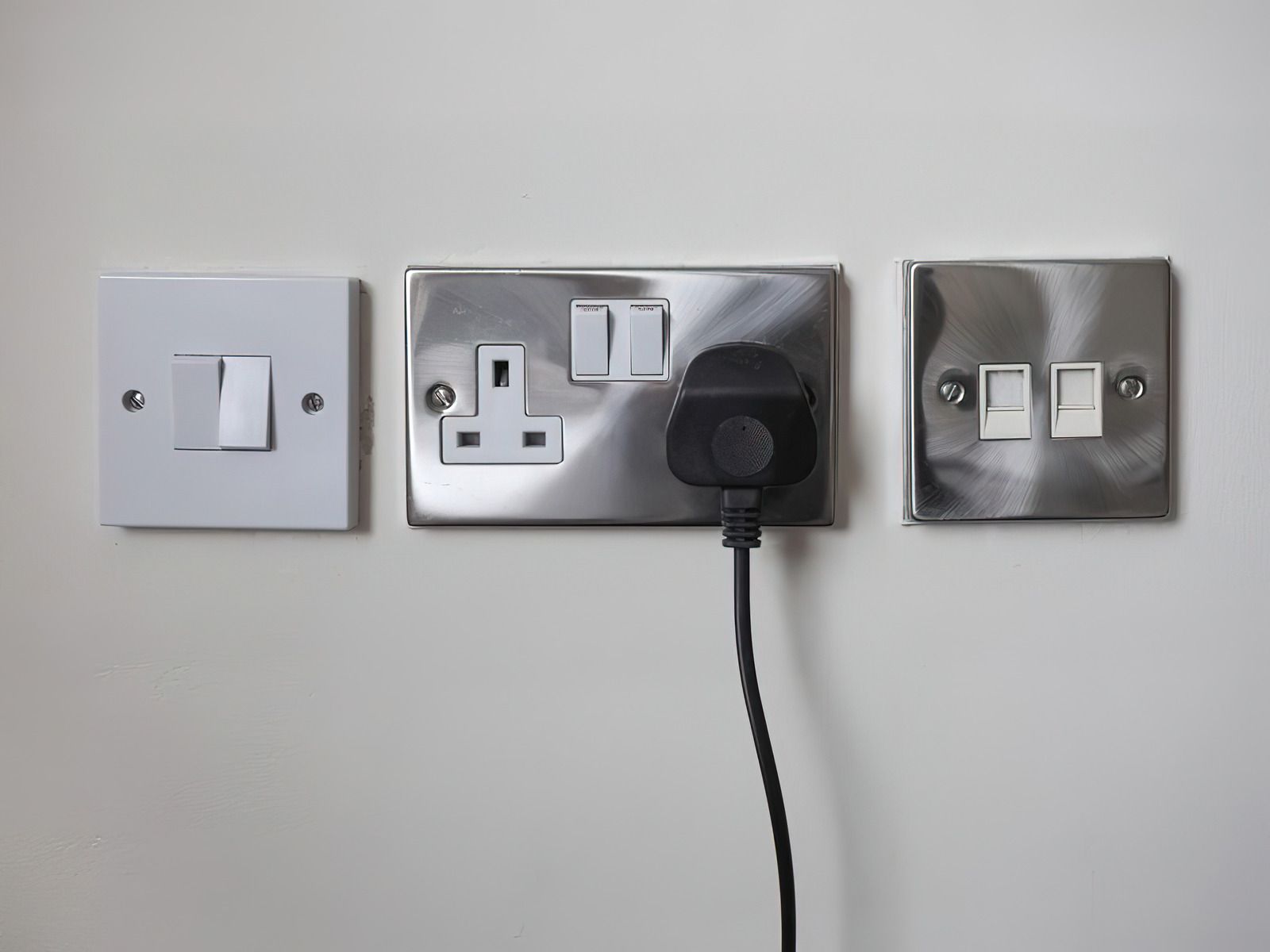
QUICK ANSWER: An outlet that feels warm or shows brown, yellow, or black discoloration around the plug slots or faceplate is telling you heat has already built up behind it, and heat at an outlet has no safe explanation. The usual causes are a loose wire connection, a worn or overloaded circuit, a failing backstab connection, or arcing between a plug and the receptacle contacts. Any of these can ignite the wall cavity behind the outlet. The right move is to stop using that outlet immediately, shut off its breaker if you can identify it, and have an electrician trace the cause before anything gets plugged back in.
You go to plug in a lamp or a phone charger, and something feels off. The outlet is warm, not hot exactly, but noticeably warmer than the wall around it. Or you notice the plastic around the slots has gone slightly brown, or there's a faint scorched smell when you lean close. Most people pause, decide it's probably nothing, and plug the charger in anyway. That instinct is understandable and also exactly backward.
Outlets don't get warm on their own. There's no normal operating condition for a residential receptacle that involves it running hot to the touch, and there's no ordinary process that discolors the plastic around the prongs. Both symptoms mean electricity is meeting resistance somewhere it shouldn't, and that resistance is generating heat right where you plug things in.
This isn't something to monitor for a while and see if it gets worse. It's already past the "keep an eye on it" stage.
What's Actually Happening Behind a Warm Outlet
Electricity flowing through a properly connected circuit doesn't generate meaningful heat at the outlet. The wire is sized for the current, the connections are tight, and the path from breaker to receptacle has low, even resistance the whole way. Warmth changes that picture. Wherever a connection loosens, a contact corrodes, or a wire is undersized for what's being asked of it, resistance spikes at that one point, and resistance turns electrical energy into heat.
That heat doesn't stay contained to the metal parts you can't see. It travels into the plastic housing of the receptacle, which is why you feel it at the faceplate, and it's also why the plastic around the slots can start to brown or yellow. Discoloration is scorching, just early enough that it hasn't turned into a visible burn mark yet. By the time you can see that browning, the outlet has already been running hotter than it should for some time, likely on and off for weeks, not minutes.
The Usual Culprits
A handful of conditions account for nearly every warm or discolored outlet, and figuring out which one applies determines what actually needs to happen next.
A loose wire connection
Screws holding the hot or neutral wire to the receptacle can back out gradually from heating and cooling cycles, vibration, or simply not having been torqued down fully during installation. A loose connection means the wire isn't making full contact, and that gap is where resistance and heat concentrate.
A failing backstab connection
Many receptacles allow wires to be pushed into spring-loaded holes on the back instead of wrapped around a screw terminal. It's faster to install, but the spring clip makes far less contact area than a properly tightened screw, and those clips weaken with age and heat cycling. A backstabbed outlet is one of the more common reasons a single receptacle runs warm while everything else on the circuit is fine.
An overloaded circuit
Plugging a space heater, window AC unit, or other high-draw appliance into an outlet that's also feeding several other devices can push more current through that receptacle than it's built to carry comfortably. The outlet itself may be fine, but the sustained heavy draw heats it up anyway.
Arcing at the contact points
Every time you plug something in, there's a small point of contact between the prongs and the receptacle's internal contacts. If those contacts have worn, corroded, or loosened their grip, tiny arcs can jump across the gap each time the plug is inserted or the connection shifts slightly. Arcing generates intense, localized heat, far hotter than the surrounding wire, and it's a major contributor to outlet-area scorching.
Age and wear
Receptacles aren't built to last the life of the house. Plastic housings become brittle, internal springs lose tension, and repeated heat cycling accelerates all of it. An outlet installed decades ago that's seeing regular use is a reasonable candidate for warmth even without an obvious external cause.
TIP: When you check a suspect outlet, use the back of your hand rather than your fingertips, and don't force a plug in and out repeatedly to test it. Note which outlet it is, what's usually plugged into it, and whether the warmth shows up only when something specific is running. That pattern is useful information for whoever diagnoses it, and it saves you from adding more wear to a connection that may already be arcing.
Why This Isn't a Wait-and-See Situation
A warm outlet is easy to rationalize away because nothing dramatic has happened yet. No breaker tripped, no lights flickered, nothing sparked. But the absence of a bigger symptom doesn't mean the underlying condition is mild. Loose connections and arcing contacts get worse over time, not better, because each cycle of heating and cooling stresses the metal and plastic further and increases resistance at the fault point. A receptacle that's mildly warm today can be hot enough to ignite the surrounding wall cavity later, and there's no reliable way to predict how long that progression takes from the outside.
The outlet box itself typically sits against wood framing, insulation, and drywall. All of that can smolder or ignite well before you'd notice smoke or smell from inside the room. And that's the real risk with this warning sign: the heat source is hidden behind the faceplate, working on materials you can't see, right up until it isn't hidden anymore.
WARNING: Stop using any outlet that feels warm or shows browning around the slots. Unplug whatever is connected to it, and if you know which breaker feeds that circuit, switch it off until the outlet has been inspected. Don't keep testing it by plugging things back in to see if it still works. A receptacle that's already showing heat damage can fail at any time, and continuing to draw current through it only adds more cycles to a connection that's already compromised.
What Gets Checked Once It's Diagnosed
Tracking down the actual fault means opening up the receptacle and looking at what's happening at the connection points, not just at the outlet's face. An electrician working through a warm or discolored outlet typically checks the tightness and condition of the screw terminals or backstab connections, looks for scorch marks or melted plastic inside the box that would confirm where the heat originated, tests whether the load on that circuit is appropriate for the wire size, and inspects the wire insulation for brittleness or damage from sustained heat exposure. If the receptacle itself is the source, replacing it with a properly wired, screw-terminated unit resolves it. If the heat is coming from further back, a loose connection at the panel or a wire gauge mismatch, the fix has to happen there instead, because a new outlet won't correct a problem sitting upstream of it.
One Warm Outlet Versus Several
It matters whether the warmth shows up at a single receptacle or at more than one outlet on the same circuit. A single warm outlet usually points to something local, a bad connection or a worn receptacle at that specific spot. Warmth or discoloration showing up at multiple outlets tends to point further back, toward a shared connection issue at the breaker, a circuit that's undersized for what it's carrying, or a neutral connection problem affecting everything downstream of it. That distinction changes where the repair needs to happen, and it's part of why a proper inspection traces the circuit rather than treating each outlet as an isolated case.
Letting the Warning Do Its Job
An outlet that runs warm or shows discoloration isn't a minor cosmetic issue or something to note and revisit later. It's evidence that heat is already concentrating somewhere in that connection, whether from a loose terminal, a failing backstab clip, an overloaded circuit, or contacts that have started to arc. None of those conditions improve with time or continued use, and the box hiding the heat source sits directly against the framing and insulation inside your wall. Treating the warmth as the early signal it is, rather than waiting for a tripped breaker or a burning smell to confirm it, is what keeps a hidden fault from becoming a hidden fire.
Frequently Asked Questions
Why would only one outlet in my house feel warm?
A single warm outlet usually points to a local issue such as a loose wire, worn receptacle, failing connection, or arcing. It should be inspected promptly before the problem becomes more serious.
Is a slightly warm outlet different from one that's hot?
Yes. Slight warmth often signals an early electrical issue, while a hot outlet indicates greater resistance and increased fire risk. Both require attention, but a hot outlet needs immediate action.
Can discoloration around an outlet appear without it ever feeling warm?
Yes. Heat damage may occur only while the outlet is under load, leaving brown or yellow marks behind. Any discoloration indicates previous overheating and should never be ignored.
Does a warm outlet always mean the wiring behind the wall is damaged?
Not always. Sometimes only the receptacle has failed, while other cases involve damaged wiring or insulation. An inspection determines whether the problem is isolated or extends further.
If I unplug everything from a warm outlet, is it safe to keep using the rest of the house normally?
Usually yes, if only one outlet is affected. Stop using that receptacle immediately. If multiple outlets feel warm, switch off the circuit until it has been inspected.
Can a GFCI or AFCI outlet still run warm even though it has built-in protection?
Yes. GFCI and AFCI devices provide valuable protection, but they cannot prevent heat from loose terminals, worn contacts, or failing connections inside the receptacle itself.
How quickly should a warm or discolored outlet be looked at?
As soon as possible. Heat damage can worsen without warning, increasing fire risk over time. Prompt inspection helps identify the cause before the outlet or surrounding wiring deteriorates further.
Recognizing Small Signs Before Bigger Electrical Problems
Warmth or discoloration around an outlet is one of those warning signs that deserves attention because it points to heat developing where electrical connections should remain cool. Whether the cause is a loose terminal, worn receptacle, overloaded circuit, or deteriorating connection, the outlet is already showing evidence that something has changed behind the wall. Addressing the issue early prevents unnecessary stress on the electrical system and helps keep the surrounding wiring and materials in proper condition.
With 10
years of experience, Mint Electric
has diagnosed electrical concerns in homes throughout Mapleton, UT, where aging receptacles, increased electrical demands, and everyday wear can all contribute to outlet problems. Understanding what a warm or discolored outlet is communicating allows homeowners to respond appropriately before the damage progresses, making these small warning signs an important part of maintaining a safe and
dependable electrical system.